
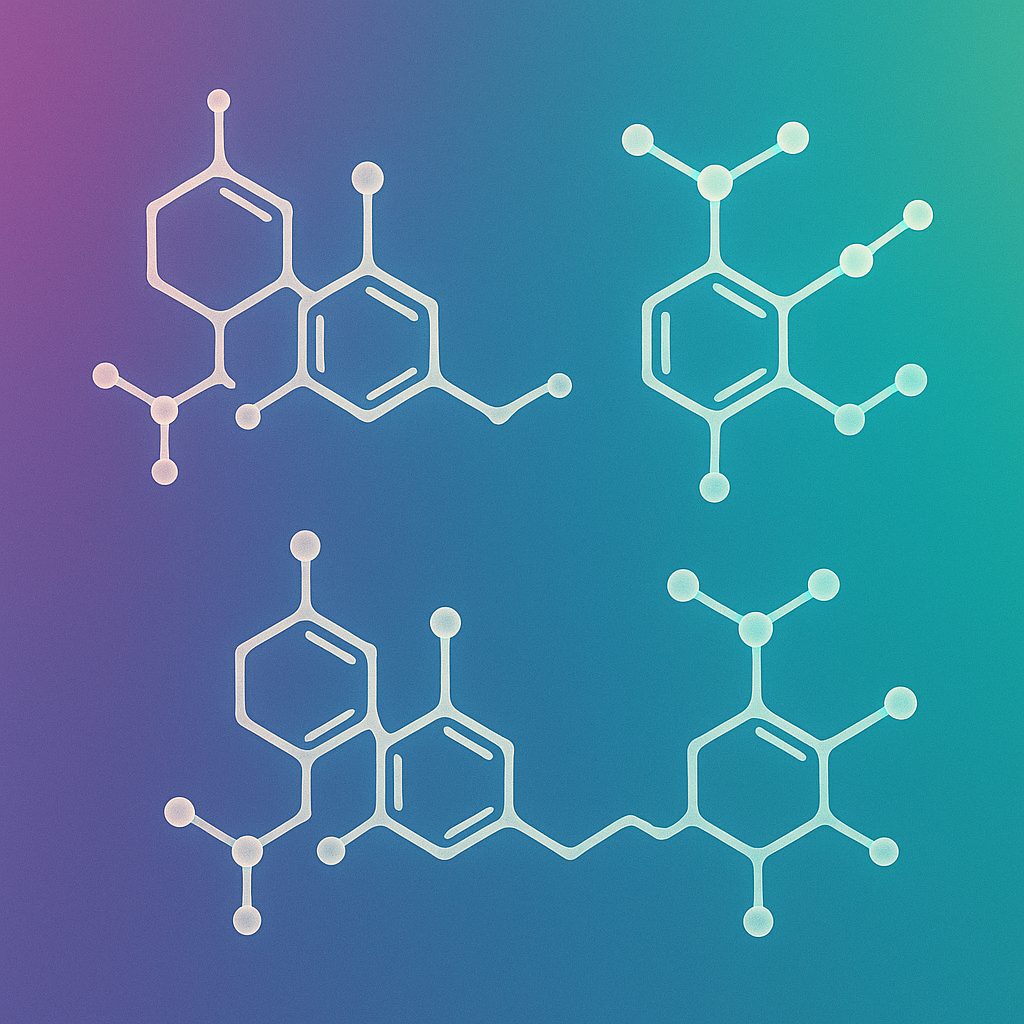

Minor Cannabinoids Watch: THCV, CBDV, CBC
Beyond CBD and THC lies a fascinating frontier of minor cannabinoids with unique potential benefits. This research roundup explores the latest findings on THCV, CBDV, and CBC—compounds gaining attention for their distinctive properties. While CBD and THC dominate discussions about cannabis-derived wellness, these lesser-known cannabinoids may offer complementary or alternative options for those exploring natural approaches to wellbeing. As research evolves, understanding these compounds becomes increasingly valuable for informed wellness choices.
THCV: The Appetite-Modulating Cannabinoid

Tetrahydrocannabivarin (THCV) has emerged as a compound of interest for its potential metabolic effects. Unlike THC, THCV may actually suppress appetite at low doses, earning it the nickname “diet cannabinoid” in some circles. Recent research suggests THCV might influence energy homeostasis and glucose metabolism, making it intriguing for metabolic wellness applications. A 2020 preclinical study published in the Journal of Cannabis Research found THCV may support healthy insulin sensitivity. For those interested in learning more about cannabinoids beyond the mainstream, our Academy offers educational resources that explore these emerging compounds. While THCV research remains preliminary, it represents part of the answer to the question: Are Cannabinoids the Future of natural healthcare solutions? Its unique profile distinguishes it from better-known compounds covered in A Comprehensive Guide to CBD and CBG: Promising Alternatives.
CBDV: Structural Cousin to CBD with Distinct Properties

Cannabidivarin (CBDV) shares structural similarities with CBD but demonstrates its own biological activity profile. Research into CBDV has accelerated in recent years, particularly regarding its potential neurological applications. A 2018 study in Translational Psychiatry suggested CBDV may influence neurochemical pathways related to neurodevelopment. This has sparked interest in CBDV as potentially relevant to neurological research, as discussed in A New Frontier in Epilepsy Care: Exploring the Therapeutic B. CBDV appears to interact with transient receptor potential (TRP) channels differently than other cannabinoids, potentially offering unique properties. GW Pharmaceuticals, the company behind the FDA-approved CBD medication Epidiolex, has invested in CBDV research, signaling scientific interest in this compound. For those following cannabinoid research, creating a personalized information hub can help track developments—you can Create an Account on platforms dedicated to cannabinoid science updates.
CBC: The Anti-Inflammatory Potential

Cannabichromene (CBC) stands out for its potential anti-inflammatory properties through non-cannabinoid receptor pathways. Unlike CBD and THC, CBC appears to work primarily through the transient receptor potential ankyrin 1 (TRPA1) channel and other mechanisms. A 2021 review in the International Journal of Molecular Sciences highlighted CBC’s ability to modulate inflammatory responses in preclinical models. This non-intoxicating cannabinoid may also support healthy skin function, with research suggesting sebum-regulating properties. The entourage effect—the theory that cannabinoids work better together than in isolation—may be particularly relevant for CBC, as it appears to enhance the effects of other cannabinoids. About Natural Pain Relief: How surgeonsolution.io’s Full Spe explores similar synergistic approaches to wellness. CBC’s unique pharmacology makes it an important component of whole-plant formulations, though isolated CBC products are becoming more available as consumer interest grows.
The Entourage Effect: How Minor Cannabinoids Work Together
The entourage effect theory suggests cannabinoids and terpenes work synergistically, potentially enhancing beneficial effects while mitigating unwanted ones. Minor cannabinoids like THCV, CBDV, and CBC may play crucial roles in this botanical ensemble. Research published in Frontiers in Plant Science suggests these compounds may modulate the activity of major cannabinoids through receptor interaction and metabolic pathways. “Advanced Cannabinoid Wellness: CBD programs often emphasize full-spectrum approaches that preserve this natural synergy. When comparing isolated cannabinoids to whole-plant extracts, studies frequently observe different effect profiles, supporting the entourage concept. This synergy extends beyond cannabinoid-cannabinoid interactions to include terpenes and flavonoids. Understanding these complex relationships helps explain why different cannabis chemovars produce distinct effects despite similar THC/CBD content. For consumers navigating these options, educational resources in the About Us section of reputable companies can provide valuable context on product formulation philosophy.
Current Research Limitations and Future Directions
Despite promising preliminary findings, research on minor cannabinoids faces significant challenges. Human clinical trials remain limited, with most evidence coming from preclinical models. Regulatory hurdles continue to complicate research efforts, though recent policy shifts have improved access for scientists. Standardization issues present another obstacle—natural variation in plant chemistry makes consistent study materials difficult to source. Future research priorities include pharmacokinetic studies to understand how these compounds are metabolized, dose-response investigations to establish optimal usage parameters, and long-term safety assessments. The development of synthetic pathways and biosynthesis methods may soon make these rare cannabinoids more accessible for both research and consumer applications. As interest grows in alternatives to conventional approaches, publications like A Comprehensive Guide to CBD for Autism: Navigating Benefits highlight the need for rigorous research on specialized applications. “Best Daily Health Habits via Surgeons and other wellness authorities increasingly recognize the importance of evidence-based approaches to cannabinoid use.
Consumer Considerations: Finding Quality Minor Cannabinoid Products
As interest in minor cannabinoids grows, so does the market for products containing these compounds. When exploring THCV, CBDV, or CBC products, third-party testing becomes essential to verify cannabinoid content and purity. Certificate of Analysis (COA) documentation should be readily available and comprehensive. Extraction methods significantly impact the minor cannabinoid profile—some processes may destroy or alter these delicate compounds. Consumers should understand that dosage recommendations remain preliminary due to limited clinical research. Price considerations are also important, as these rare cannabinoids typically command premium prices compared to CBD products. For those comparing different options, Are THC Drinks Healthier Than Alcohol? The Ultimate Comparis and similar comparative resources can provide valuable context. When exploring these emerging options, consulting the About section of reputable manufacturers can reveal important information about sourcing and extraction methods. As with any wellness product, starting with low doses and monitoring effects is recommended when trying minor cannabinoid formulations.
FAQ
How do minor cannabinoids differ from CBD and THC?
Minor cannabinoids like THCV, CBDV, and CBC occur in smaller quantities in the cannabis plant compared to CBD and THC. Each has a unique molecular structure that influences how it interacts with the body’s endocannabinoid system and other receptors. THCV may suppress appetite (unlike THC), CBDV shows distinct neurological properties, and CBC works primarily through non-cannabinoid receptors. These differences result in varied potential benefits and applications compared to the major cannabinoids.
Are products containing minor cannabinoids legal?
The legal status of minor cannabinoids depends on their source and local regulations. When derived from hemp (cannabis with less than 0.3% THC) and containing no more than the legally permitted THC threshold, products featuring minor cannabinoids like CBC and CBDV are federally legal in the US under the 2018 Farm Bill. However, state and international laws vary significantly. Always verify current local regulations before purchasing, as the legal landscape continues to evolve.
How can I find products containing specific minor cannabinoids?
Specialized cannabinoid retailers, particularly those focusing on full-spectrum hemp products, increasingly offer minor cannabinoid formulations. Look for products with detailed Certificates of Analysis (COAs) that specifically test for and quantify minor cannabinoids. Some companies now offer isolates or enriched formulations targeting specific compounds like THCV or CBC. Online retailers often provide more specialized options than physical stores, though availability is expanding as consumer interest grows.
Do minor cannabinoids cause intoxication like THC?
Most minor cannabinoids, including CBC and CBDV, do not produce intoxicating effects similar to THC. THCV is unique—at low doses it appears non-intoxicating and may even block some THC effects, but at higher doses, it may produce THC-like effects, though typically shorter in duration. The current research suggests these compounds don’t significantly impair cognition or coordination at typical doses, but individual responses may vary, especially when combined with other cannabinoids.
How do minor cannabinoids contribute to the entourage effect?
Minor cannabinoids contribute to the entourage effect by modulating how major cannabinoids interact with the body’s receptors. They may enhance beneficial effects, reduce unwanted side effects, or activate complementary biological pathways. For example, CBC may enhance the anti-inflammatory potential of a full-spectrum extract, while THCV might counterbalance THC’s appetite-stimulating properties. This complex interplay helps explain why whole-plant preparations often produce different effects than isolated compounds, even at equivalent major cannabinoid concentrations.
The emerging research on minor cannabinoids reveals a complex and promising frontier in plant-based wellness approaches. As studies on THCV, CBDV, and CBC continue to evolve, staying informed through reputable sources will help you navigate this dynamic field with confidence.
Further reading
- Best Times to Take CBN for Optimal Sleep and Relaxation
- Best Way to Consume HHC: Hexahydrocannabinol Facts
- Best Ways to Smoke or Vaporize CBD Hemp Flower
- Breaking New Ground: The Promise of CBD and CBG for Autism T
- Browse Surgeons Products Online Today For Best Selections
- CBD & Hemp Extracted Dog / Pet Oil 1000mg
- CBD Hemp Flower vs. THC Flower: Key Differences Explained
- CBD Topicals for Neuropathy: A Natural Pain Solution
References
- FDA: Cannabis and Cannabis-Derived Products (Including CBD) – Public Health Focus
- FDA Consumer Update: What You Need to Know About Products Containing Cannabis or CBD
- NIH NCCIH: Cannabidiol (CBD) – What You Need To Know
- NIH MedlinePlus: Cannabidiol (CBD) – Supplement Information
- NIDA: Cannabis (Marijuana) Research & Facts
- CDC: Marijuana and Public Health
- SAMHSA: Marijuana Risks (Public Health Information)
- National Academies (NASEM): The Health Effects of Cannabis and Cannabinoids (2017 Report)
- ClinicalTrials.gov: Studies on Cannabidiol (CBD)
- PubMed: Cannabidiol (CBD) – Literature
Leave a Reply